A Lifetime on the Land – How a Parks Canada Veteran Found His Own Slice of Heaven Along the Assiniboine Valley
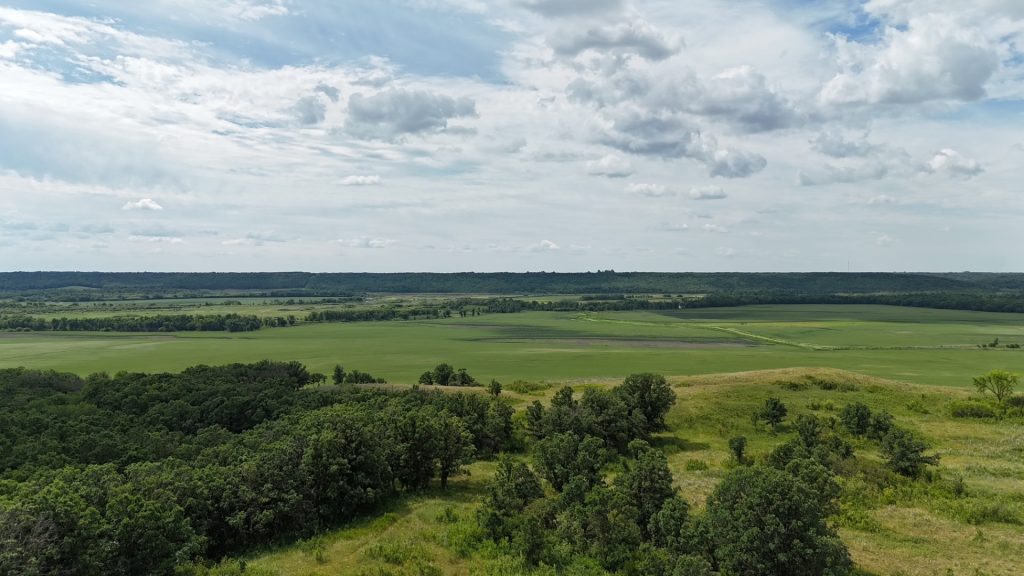
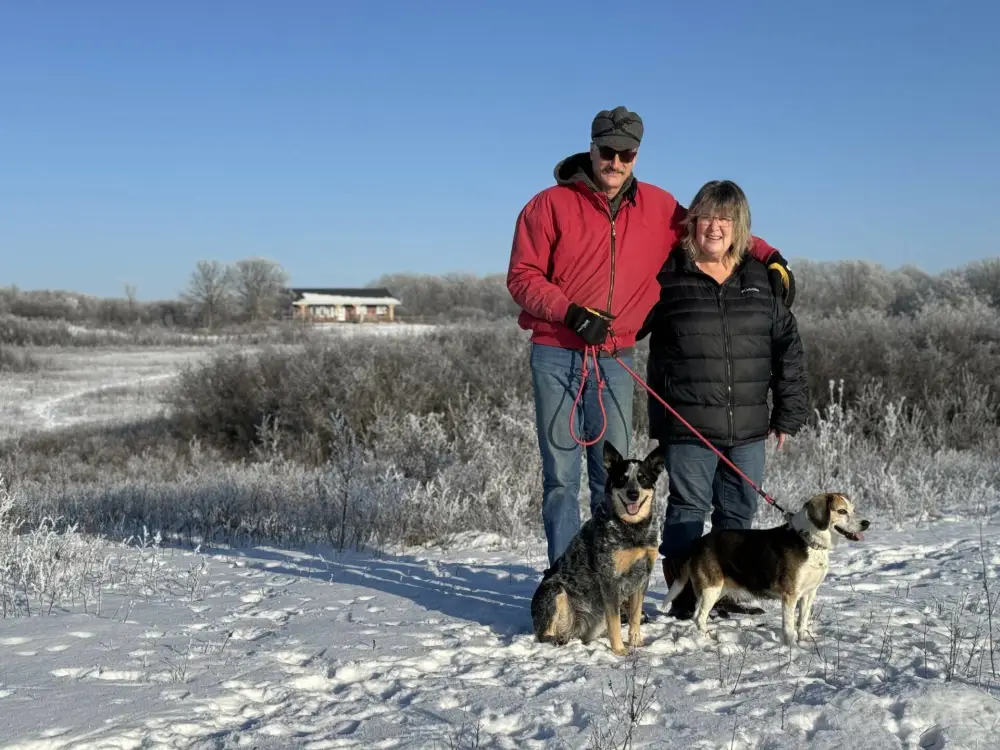
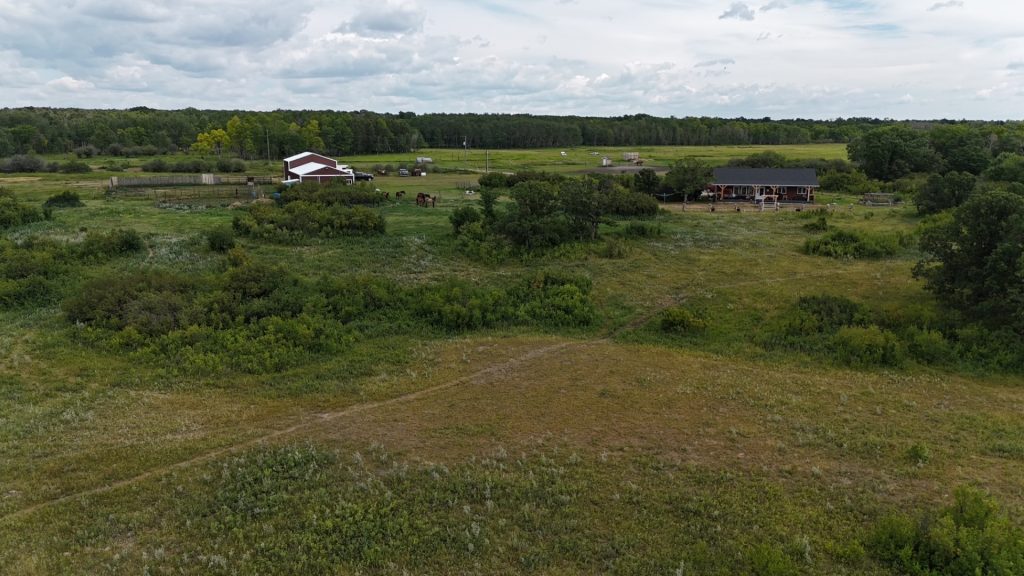
After 35 years working to protect some of Canada’s most iconic wild places, Stephen Cornelson has found his own. Tucked along the Assiniboine Valley near Virden, Manitoba, the 80-acre property he shares with his wife Janice is a living mosaic of prairie, meadows, and parkland that Stephen believes may be among the most biologically diverse parcels of its size anywhere in the province.
Now, through a conservation agreement with Manitoba Habitat Conservancy (MHC), that diversity has a measure of permanent protection.
Stephen’s career with Parks Canada took him from the mountains of Banff and Jasper to the boreal stretches of Wood Buffalo National Park, before spending the final two decades in Riding Mountain National Park (RMNP), eventually serving as the park’s resource conservation manager. It’s a résumé most conservationists would envy, but when it came time to retire, neither Stephen nor Janice was pulled back toward the peaks.
“I grew up on a ranch in the Cypress Hills area,” Stephen explains. “We’ve kind of worked in the mountains or the boreal forest, but both my wife and myself are in love with the prairies and the open landscapes.”
When a friend pointed them toward a property near Virden, they went to have a look. “As soon as we drove into the area, we both knew it was going to be the place we wanted to retire. Our own little slice of heaven, basically.”
The property more than delivered. Spanning multiple grassland and woodland communities across 80 acres, it checked every box. “We’ve got shortgrass, mixed grass, tall grass, oak, aspen parkland, it’s got everything,” Stephen says. “If you took an 80-acre parcel pretty much anywhere in Manitoba, I bet we’ve got the most biological diversity of all of them.”
Stephen’s years in conservation had shaped a particular way of seeing the landscape. Where some may see isolated parcels, the Cornelsons saw a part of a larger ecological whole. At RMNP, much of his work centered on the Biosphere Reserve and the essential role of neighbouring landowners, farmers, and ranchers in sustaining the park’s health.
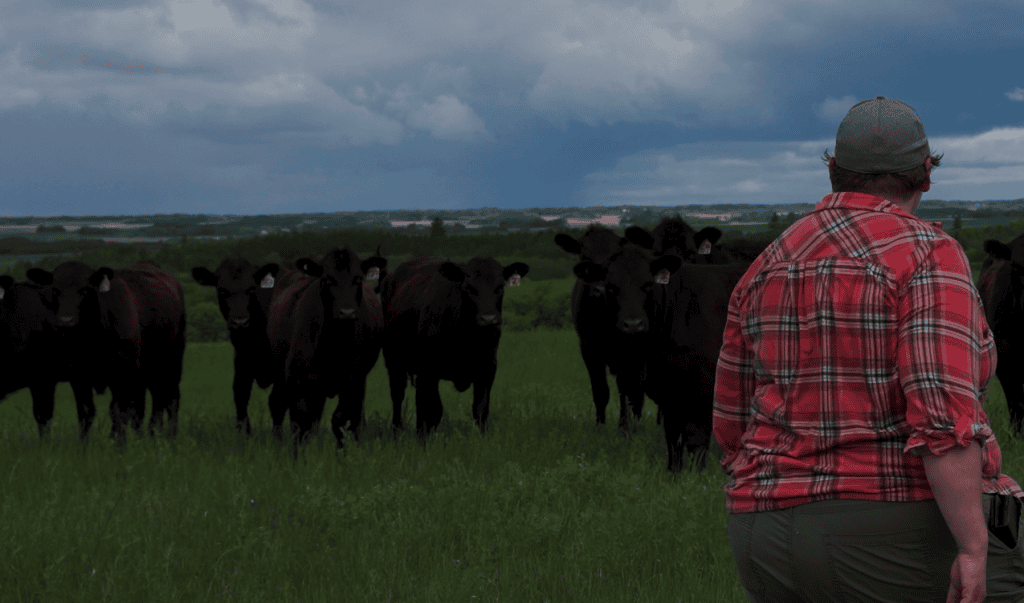
“The only way the parks can survive is if they work with their neighbours,” he says. “So that was a lot of the focus of my career, working on the other side of the fence.”
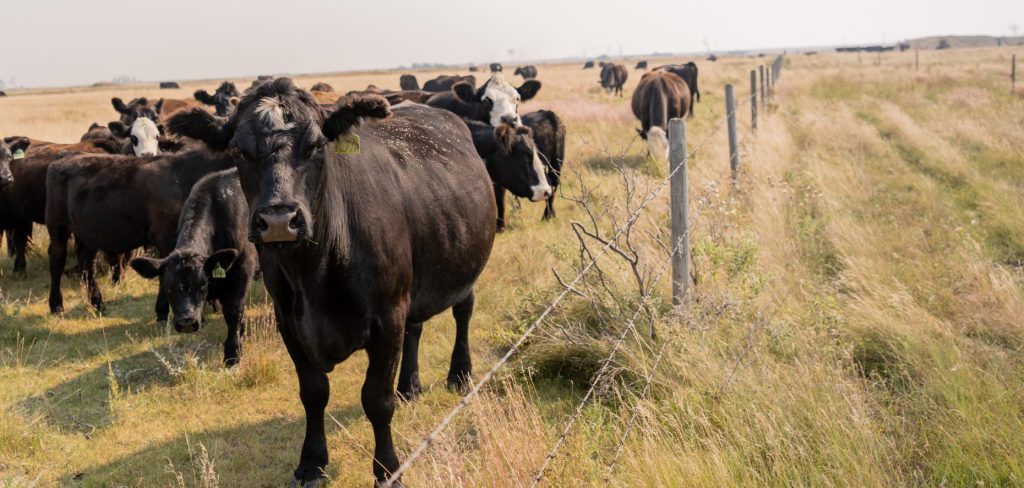
That perspective made the Assiniboine Valley an obvious fit for conservation. Across the valley sits a Wildlife Management Area (WMA) and to the east is Eternal Springs municipal park. Most neighbouring landowners run cattle on native-grazed land, not cultivated fields. As Stephen began connecting the dots, his own 80 acres took on new significance.
“When I start piecing [these areas] together, you start looking at the bigger picture and it’s a pretty unique little protected corridor going along this river.”
A nudge from a neighbour who had already been in conversation with MHC was all it took to solidify the idea. “It’s a no-brainer for us,” Stephen says. “Our land use objectives are pretty much the same. We can do what we need to do, there’s an abundance of wildlife, there’s lots of forage for everybody. The goals are all aligned. It’s a complementary process.”
What makes the Cornelson property particularly remarkable isn’t just its scenery (though the view from their south-facing deck across the valley is by all accounts something special). It’s what lives there.
Stephen is an active contributor to iNaturalist, spending hours on the property documenting species throughout the growing season. The list reads like a wish list: chestnut-collared longspurs, tree swallows, barn swallows, bank swallows, various hawks, and abundant waterfowl from the nearby Oak Lake Important Bird Area. The property sits at the edge of multiple ecosystem types, drawing a variety of species. Elk and other ungulates move through regularly, with Stephen noting wolves and cougars have also been spotted in the valley.
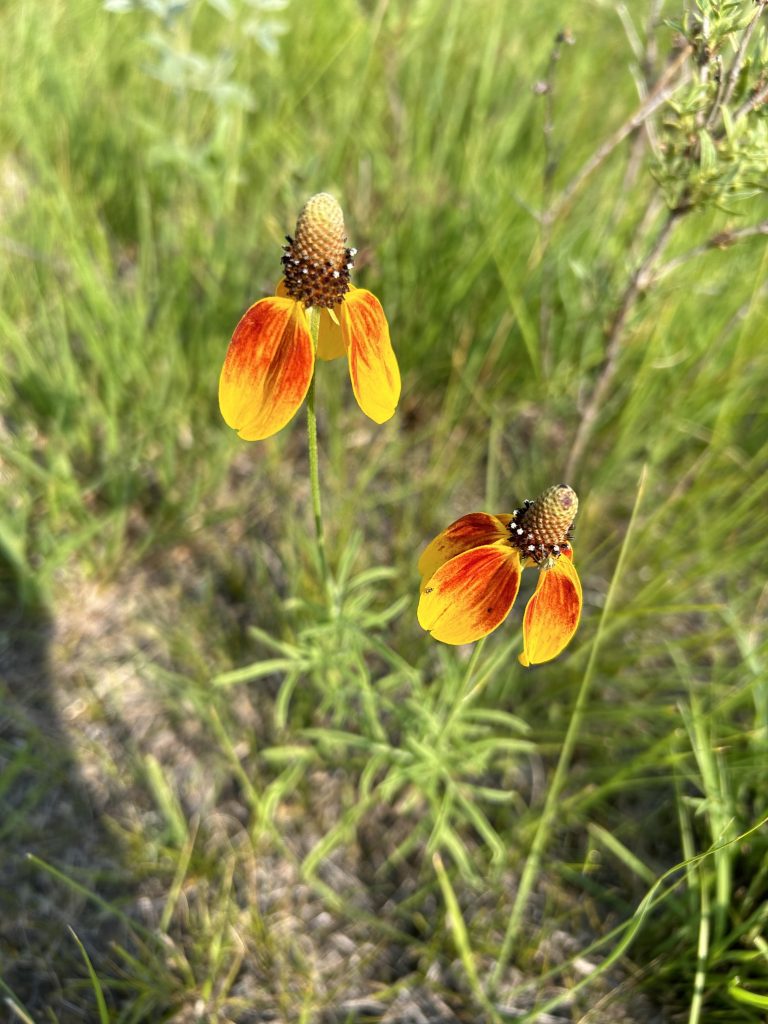
Among the vegetation highlights are over 100 species of grasses, forbs, and several rare finds, including a native prickly pear cactus. Stephen has documented species at risk and plants recorded only a handful of times in Manitoba. “It crosses so many different ecosystems,” he says. “You’ve got grass species, everything in between, boreal species, like I said it’s a biodiversity hotspot.”
One of the more unusual finds: plains spadefoot toads, rarely recorded in the region. And the diversity doesn’t follow a seasonal script. “It’s not just the summer,” Stephen notes. “Right now, there’s fifty-some waxwings feeding on berries around the area. Every day it changes.”
For an organization like MHC, having a voice like Stephen’s matters. He has spent a career helping landowners understand the value of stewardship. Now, as a landowner himself, he speaks from both sides of the equation, much like he did when he worked in RMNP.
“People are protective, they want to do what they want to do on their land. Anything that could impact a landowner’s ability to make a living or do what they want, I could see being a constraint.” He acknowledges that landowners may initially view these programs as a restriction or means of control, instead of the partnership agreement they really are.
For Stephen and Janice, whose goals for the property were always aligned with conservation, the agreement hasn’t really changed much. “Having a conservation agreement doesn’t change how we had planned to manage the property,” he says. “We’re utilizing some grass, which has happened for eons. That’s kind of our impact on this piece of property. It was pretty easy for us to make this decision.”
When asked what it means to know the protection on their land will last long after they’re gone, Stephen’s answer reflects both a lifetime of professional experience and something more personal.
“Every little piece that can be protected is important, no matter how big or small,” he says. “The more of these little pieces we can put together, the better chance of more species surviving into the future. It makes for a much more resilient landscape, whether it’s [against] climate impacts or invasive species.”
He’s equally at peace with whatever the future holds for the property itself. “Even if this property was sold, I think people would look at it for its value as a miniature little park versus its value as agricultural land. Somebody would buy it, enjoy being in nature, the views, the wildlife.”
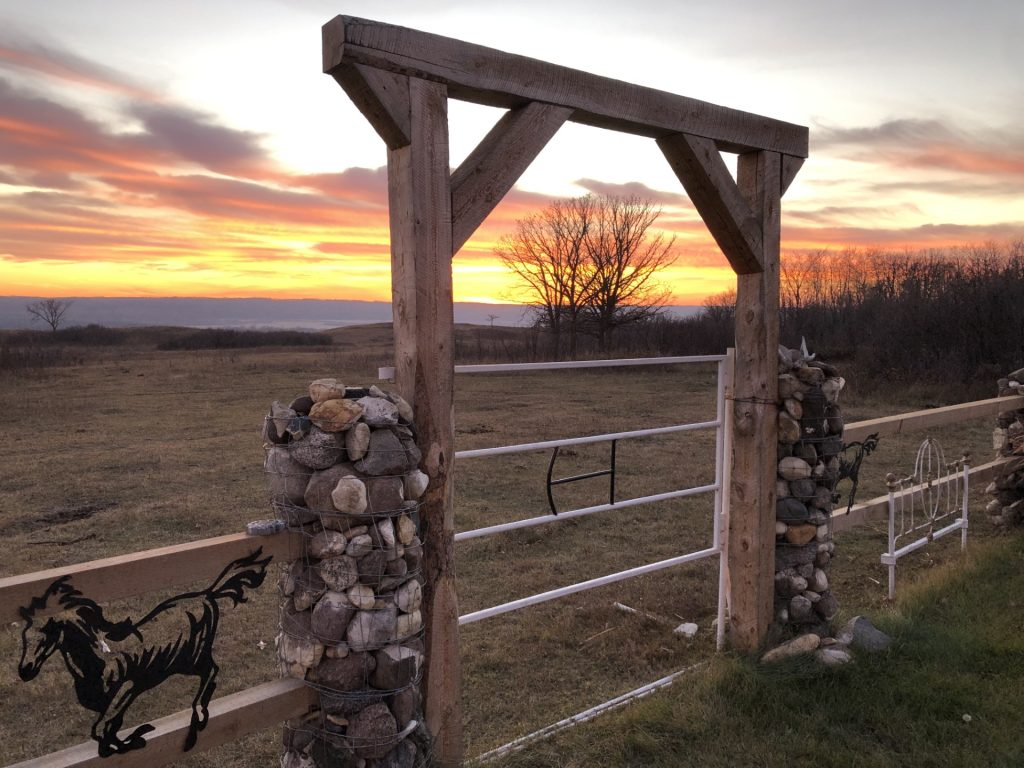
For now, though, Stephen and Janice aren’t going anywhere. Their daughter competes in rodeo, the horses graze across native prairie, and on any given day, a new species might turn up on iNaturalist. The invitation is open to MHC staff, to conservationists, to anyone who wants to see what a private landowner and a conservation-minded organization can build together.
“Come out and I’ll definitely give you the tour,” Stephen says. “You’re going to have a hard time leaving.”
The Cornelson property is protected under a conservation agreement with Manitoba Habitat Conservancy, facilitated by Conservation Program Manager Carol Graham and Habitat Conservation Specialist Amanda Hopcraft. For more information about conservation agreements in Manitoba, visit mbhabitat.ca