Wild at Heart – Michelle Weighell’s Story
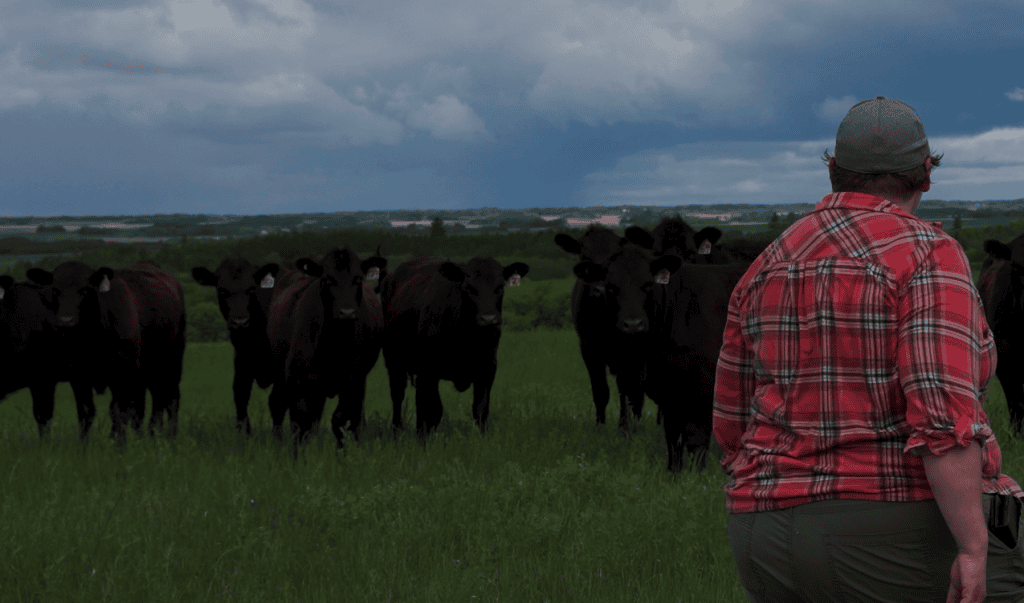
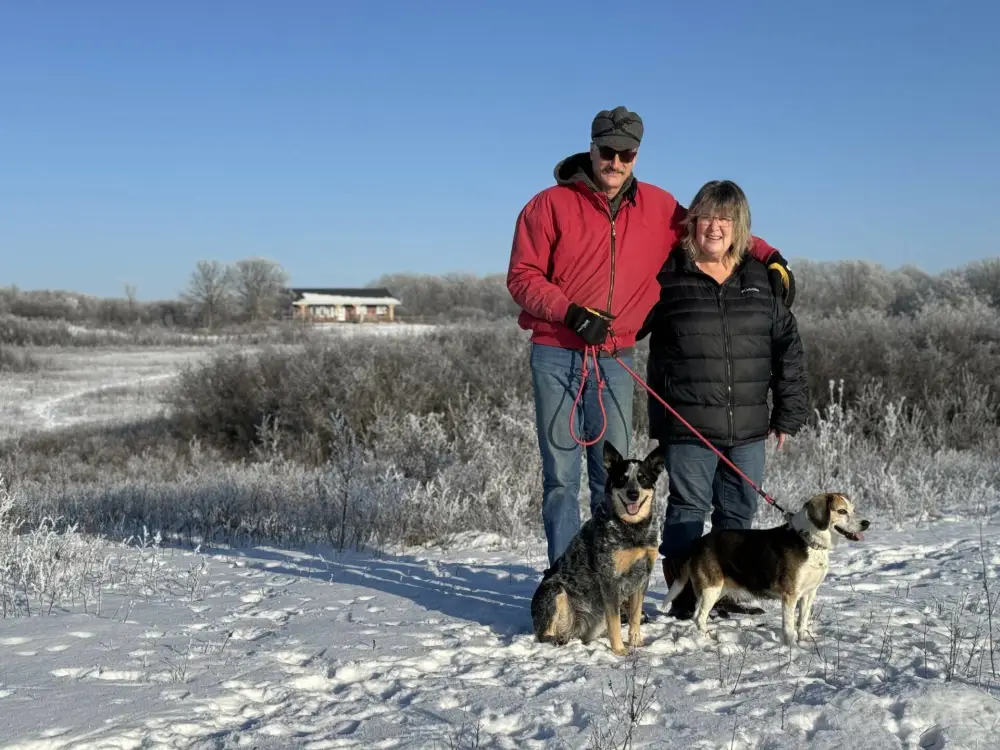
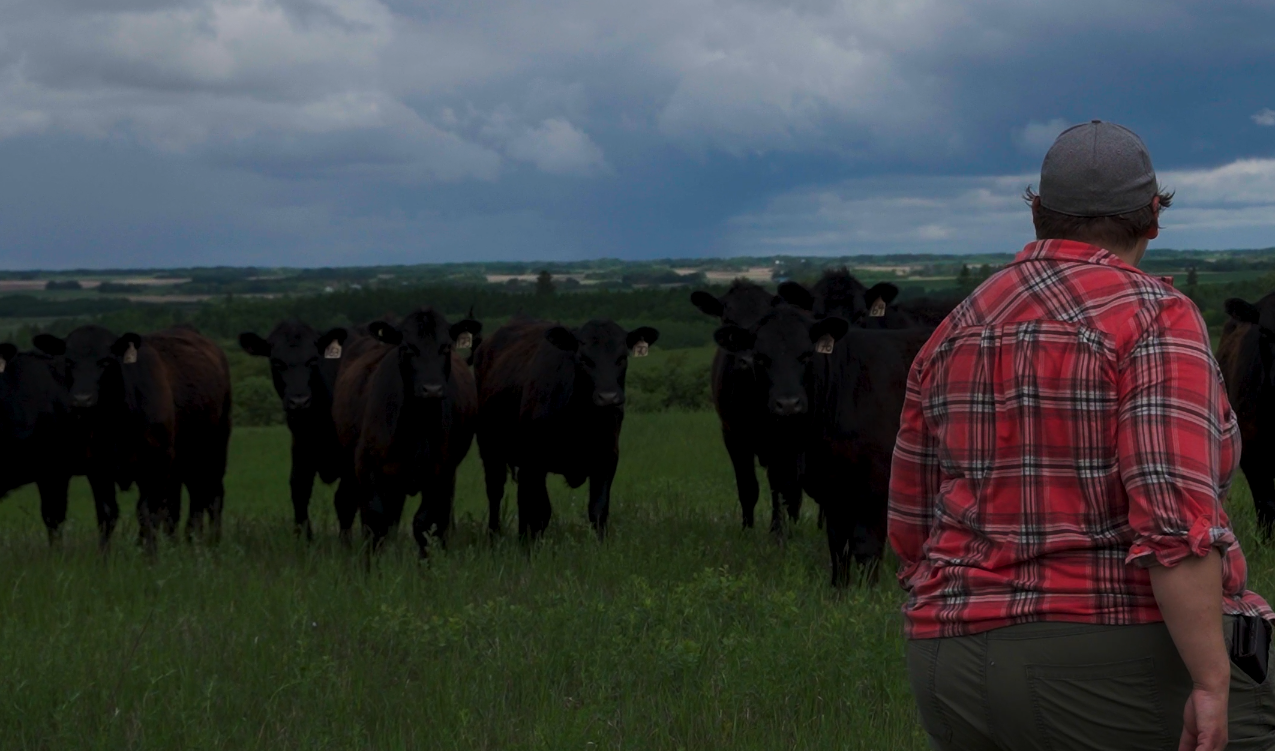
Michelle Weighell (pronounced “Wheel”) will be the first to tell you she didn’t set out to become a conservation champion, but lo and behold, she has become one. She moved back to Rapid City, Manitoba with her teenage son Liam after a difficult year, needed a home, and ended up on the 80-acre property her parents had always planned to pass down, a place she’d grown up exploring and that had, in its own stubborn way, resisted every attempt to farm it.
“I’m grateful to be allowed to live here,” she says simply. “Every time my son and I go out and do one of our little nature walks, we always find something more amazing.”
Now, through a conservation agreement and a grassland stewardship agreement with Manitoba Habitat Conservancy (MHC), that biodiversity has long-term protection. And the story of how it got there is, like Michelle herself, is extraordinary.
The land near Rapid City sits at the edge of the Assiniboine River valley, where the Riding Mountain uplands spill into a mosaic of wetlands, native prairie, and poplar and oak forest. Michelle’s father tried to work it the old way, crops, irrigation pipe laid out by hand through the fields. The land had other ideas.
“It was almost like this property just had its own thing about it,” Michelle reflects. “You’re not going to put a crop in where there’s nothing but rocks. I swear it grows rocks sometimes.”
What the land lacked in agricultural potential, it more than made up for in ecological richness. The north end of the property holds natural wetlands and a dugout; a natural spring on the old rail bed runs continuously through winter and is dammed by beavers upstream. Lady slippers grow in abundance near the water. The drier, gravelly south end supports a completely different plant community, including at least 40 species of wildflowers and native plants that Michelle and Liam catalogued on foot.
It is, by any measure, a biodiversity hotspot. And Michelle can prove it.
Ask Michelle what lives on her property and settle in for a while. The list is genuinely remarkable.
Monarch butterflies visit in significant numbers. A black-billed cuckoo (a rare enough spot that fellow birders on Facebook responded with near-disbelief when she posted the photo) landed on her deck railing one summer. A hummingbird hawkmoth appeared during a thunderstorm one evening. Tree frogs cling to tarps and fence posts throughout the warm months. Leopard frogs populate the back wetlands. Salamanders migrate through every fall, crossing the road in numbers (and making their displeasure known when approached, according to Michelle).
Then there are the snakes. A hibernaculum, a snake’s overwintering den, has been confirmed on the property, which explains the impressive snake sightings: smooth green snakes in the water, large garter snakes winding through the grass, and a memorable three-footer that a neighbor named Henrietta. “She’s harmless,” Michelle assures her more snake-averse visitors. “We’ll be fine.”
One morning at 5:30 a.m., something bolted past her foot near the old rail bed fast, low to the ground, and unmistakably lizard-like. “All my brain registered was, that was a snake with legs,” she says. A Google search for “what is a snake with legs” eventually led her to prairie skinks, a species not commonly recorded in the area but consistent with the gravelly, sandy habitat behind the rail bed.
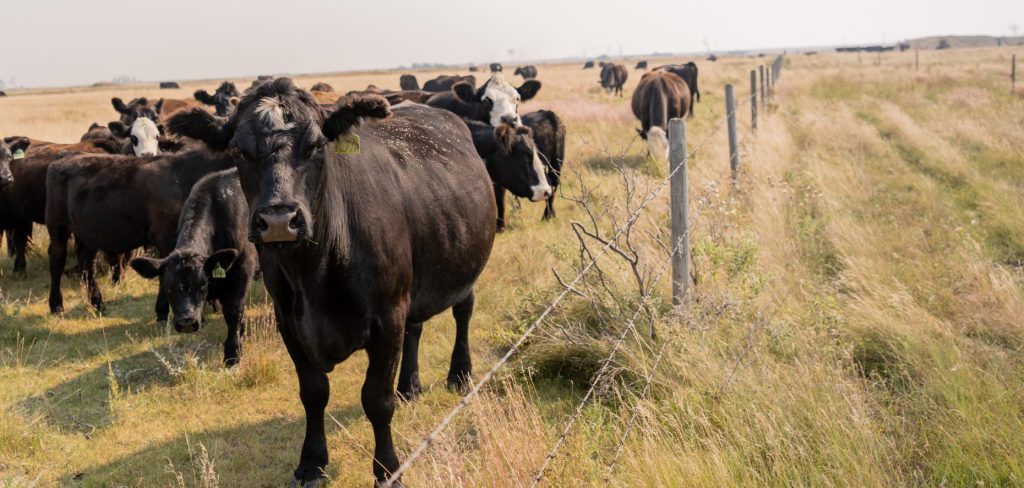
Moose, deer, elk, coyotes, bears, and wolves round out the mammal list. Even the livestock coexist peacefully: Michelle’s horses and goats share the pasture with the full cast of predators that move through the valley, and so far, nothing has bothered them.
“There are days I was like, well it might eat the goat,” she admits. “But nothing. They just don’t bother with any of them.”
One of the most striking chapters in the property’s recent history involves Michelle’s pony. After a rough period involving moldy hay and wildfire smoke, the mare had developed heaves and deteriorated badly enough that Michelle’s farrier advised her to consider putting the animal down.
Michelle wasn’t ready to do that. She brought the pony to the property, still under construction at the time, and told her builder that if he saw the horse go down, not to worry about it. A hole-digging appointment was arranged for Thanksgiving weekend.
That Friday, the pony went for a mile-long walk down the road to visit the neighbours.
“I was like, there is nothing wrong with you if you can do that,” Michelle says. The turnaround, she believes, was the pasture itself. The pony had been grazing freely on goldenrod and the many other native species growing across the land. “I accredit it to that.” The mare is now 25, healthy, and very much still in residence.
It’s a story that Michelle, who spent much of her nursing career working with First Nations communities and learning about traditional plant medicine, finds entirely plausible. “There are obviously healing traits to these natural plants,” she says. “It’s something the elders I worked with always knew.”
Michelle first connected with MHC through a community word-of-mouth chain that wound through Rapid City to a friend’s son who knew Jess Belcher, MHC’s local Habitat Conservation Specialist. What started as a question about how to leave the property to conservation in her will, turned into something more.
The fencing project that followed was a community effort in every sense: nine friends and neighbours chose the two hottest weekends of August 2024 to build the fence line, navigating rocks, bog, and a strong collective preference for not cutting down trees. The result is, Michelle concedes, not perfectly straight. “It’s probably one of the most crooked fences you’ll ever see.” But it’s up, it’s functional, and it marks the edge of a property that is now, formally and permanently protected.
Michelle’s conservation work runs parallel to another project she’s equally passionate about: bringing healthcare back to the rural communities around Rapid City. As a nurse practitioner, she has opened her own independent clinic, running out of a church in Rapid City and a seniors housing facility in Oak River, to serve a rural municipality that currently has no local healthcare provider. She does home visits, same-day appointments, and has not yet collected a wage.
“I’ve been called a trailblazer,” she says. “Not always in a nice way, but…” she paused for a beat, “that’s alright.”
The parallel feels apt. Both efforts are about recognizing that communities thrive when they’re tended, not stripped back; when the underlying health of the land (or the people) is given room to express itself.
“Because of what I do, nurse practitioners always deal with health in a holistic manner,” she says. “We’re very concerned about how our environment affects our patients. I feel it’s more important now than ever that we maintain these natural areas for health. And just from speaking with the elders in the First Nations communities I worked with, yeah, it’s such a huge impact.”
When asked to sum up why she protected the property, Michelle doesn’t hesitate: “To maintain that natural diversity and natural beauty that is pretty rare to find nowadays, so that future generations can experience it and hopefully encourage more people to do it.”
Her hope for the land a hundred years from now? “[I hope] it’s expanded. I hope my son takes over, and his children, and we just see it continue to thrive. And I would like to see people come out and see it and take that home and think ‘I need to do this too’.”
She already has something of a head start on that vision. She’s taken neighbours, friends, and elderly residents of Rapid City out for rides through the property to see the wildflowers. She has a camper on site and has been told that people would pay good money to watch the sunrise from the hill to the east of her house.
“You’ve become the local park,” Tanner, MHC’s marketing and communication specialist remarked during their interview.
“That’s right,” Michelle agreed. “Guess we’ve got to get some signage.”
Michelle Weighell’s property near Rapid City is protected under a conservation easement with Manitoba Habitat Conservancy facilitated by Jessica Belcher, with an additional bequest in place to ensure long-term stewardship.